Best Machines for Making Interlocking Bricks in 2025
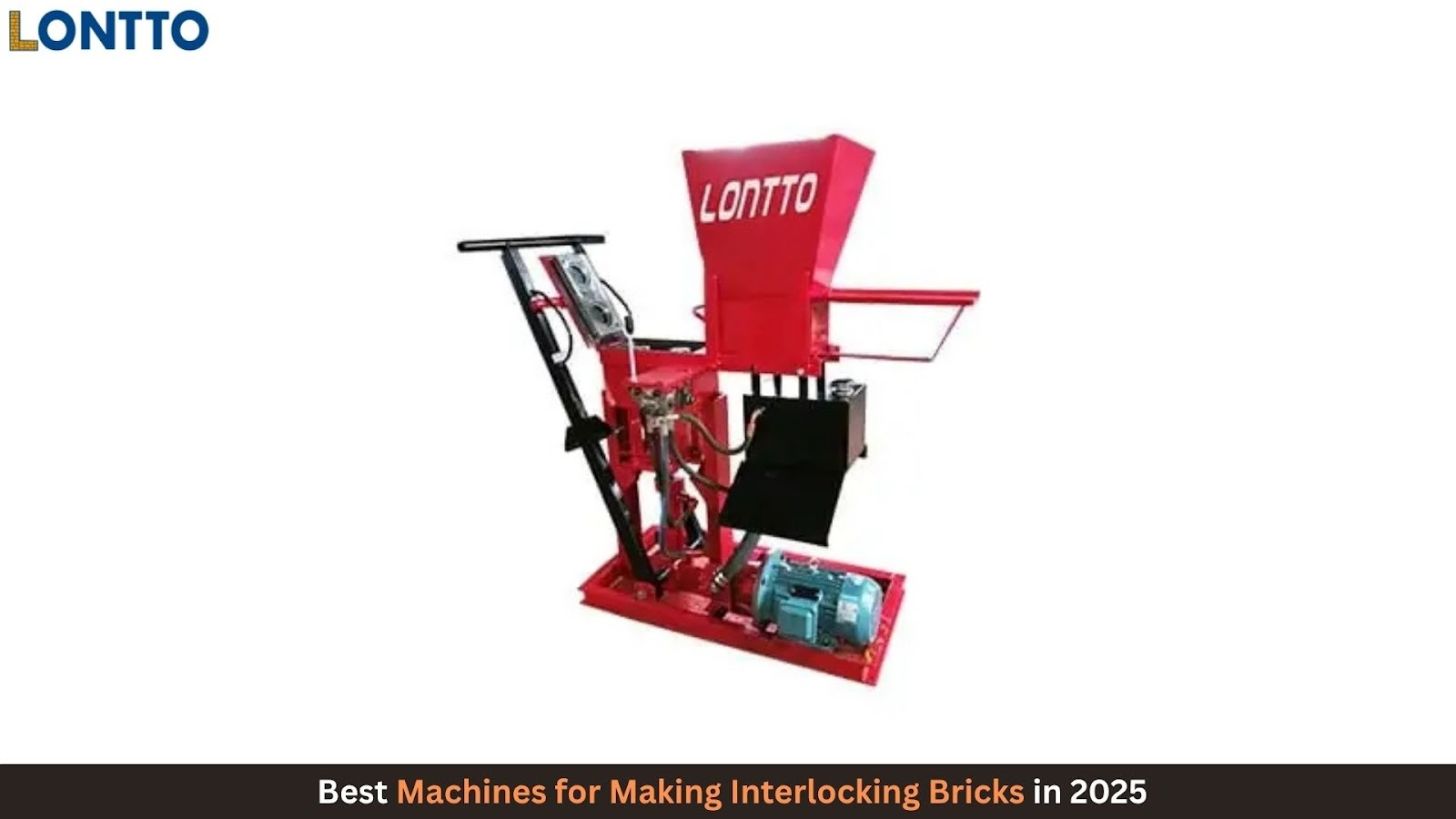
Modern construction demands innovation that balances speed, sustainability, and structural integrity. Enter the interlocking brick making machine—a game-changing technology reshaping how the world builds. Chicago-based Lontto, operating from 4992 S Austin Ave, Chicago, IL 60638, USA, stands at the forefront of this revolution. Under CEO Chao Zhang's visionary leadership, Lontto delivers cutting-edge concrete block machines, mobile block making systems, and compressed earth block equipment, complete with installation support and comprehensive training programs. Builders seeking mortarless construction solutions can reach Lontto at 708-260-8300 or lontto66@gmail.com to explore how interlocking brick technology transforms project economics and timelines.
The Economics Driving Global Adoption
Financial momentum behind interlocking brick technology tells a compelling story. Between 2023 and 2024, the worldwide brick making machines sector surged from $2.09 billion to $2.2 billion, marking a vigorous 5.1% annual growth rate. Industry forecasters project this trajectory will propel the market to $2.76 billion by 2029, maintaining a steady 5% CAGR. Within this expanding landscape, interlocking brick machines claim an increasingly valuable position as construction stakeholders recognize their transformative potential.
The broader brick industry demonstrates even more dramatic expansion, climbing from $281.9 billion in 2024 toward a projected $396.6 billion by 2035—a robust 3.15% CAGR reflecting sustained global construction demand. Interlocking bricks specifically gain market share through their distinctive self-locking designs that eliminate mortar dependencies while enhancing installation efficiency and structural stability. A parallel market assessment values brick making equipment at $2.1 billion in 2021, forecasting growth to $3.3 billion by 2031 at a 4.6% CAGR, underscoring consistent industry optimism.
Geographic concentration reveals Asia-Pacific as the dominant force in 2024, driven by explosive urbanization and infrastructure investment. The United Nations projects that urban populations will constitute 68% of humanity by 2050, creating unprecedented demand for efficient construction methodologies. Asia alone will host 3.2 billion urban residents by 2030, spawning 22 megacities requiring massive housing and infrastructure development—perfect conditions for interlocking brick technology proliferation.
Decoding the Technology: How Interlocking Brick Machines Work
Unlike traditional brick production requiring mortar binding, interlocking brick machines engineer precision blocks featuring specialized grooves, ridges, and shear-key mechanisms enabling mortarless assembly. These architectural innovations create self-locking capabilities where bricks fit together like sophisticated puzzles, redistributing structural loads across broader surface areas to minimize stress concentration points and maximize overall building integrity.
Contemporary machines integrate sophisticated technological components: Programmable Logic Controllers (PLCs) orchestrate automated production sequences, while Mitsubishi or Siemens control systems govern operational precision. Hydraulic pressure systems generate 16-31 MPa compression forces, working synergistically with vibration densification mechanisms that ensure uniform material compaction. Touchscreen interfaces democratize operation, allowing personnel with minimal technical backgrounds to manage complex production cycles. Replaceable gang mold systems revolutionize efficiency by producing multiple bricks simultaneously during each casting cycle.
Machine Categories: From Manual to Fully Automated Systems
Manual Systems: Entry-Level Accessibility
Manual interlocking brick machines operate through direct manpower or elementary hydraulic assistance, eliminating electrical or diesel power requirements. These economical units produce 1-2 bricks per molding cycle, generating 1,280-2,880 units during 8-hour shifts depending on operator skill and model specifications. The LT2-40 exemplifies this category at $800-1,000, providing affordable entry points for emerging manufacturers or small-scale operations. Lontto's ECO BRAVA configuration achieves 1,920-2,880 units per shift using 4kw electric or 6HP diesel power options, offering flexibility for diverse operational environments.
Semi-Automatic Solutions: Balanced Performance
Semi-automatic machines occupy the middle ground, combining automated features with strategic operator interventions. These systems deliver enhanced production speeds and consistency versus manual alternatives, generating 3,840-5,760 pieces per 8-hour shift. The ECO BRB model exemplifies this category, producing 2-brick molds with impressive 5-10 second forming cycles, optimizing the efficiency-cost equation for mid-sized operations.
Fully Automatic Powerhouses: Maximum Output
Fully automatic machines represent technological sophistication's apex, orchestrating complete automation from raw material feeding through finished brick ejection. The LT4-10 automatic configuration produces 4-brick cycles, achieving remarkable 11,520-23,040 unit outputs per 8-hour shift. The LT5-10 hydraulic press system advances further with 5-piece cycles generating 14,400-28,800 units per shift. The flagship LT7-10 dominates production capacity, manufacturing 7 bricks per cycle to reach extraordinary 20,160-40,320 unit outputs per 8-hour shift, leveraging 31MPa high-pressure systems ensuring exceptional brick strength characteristics.
Mobile Innovation: Production Without Boundaries
Mobile brick making machines revolutionize construction logistics by enabling on-site production, eliminating transportation costs and delays. The M7MI hydraulic mobile system operates at 16MP pressure with integrated soil mixer capabilities, producing 1,920-2,880 units per 8-hour shift powered by 6.3kw electric or 8HP diesel engines. The advanced M7MI TWIN features dual-hopper architecture permitting simultaneous two-person operation, achieving 3,840-5,760 units per shift. This mobility transforms project economics in remote locations or distributed construction scenarios where centralized production proves impractical.
Raw Material Science: Building Blocks of Quality
Interlocking brick manufacturing embraces diverse material combinations tailored to specific applications and regional resource availability. Primary compositions typically blend locally sourced soil or clay with sand in carefully calibrated proportions—common ratios include 1:4:6 (one cement portion, four sand portions, six soil portions). Cement serves as the binding agent, typically comprising 4-12% of total mixture volume depending on target strength specifications.
Alternative materials increasingly gain prominence in sustainable construction contexts. Fly ash from coal-fired power generation utilizes industrial waste while enhancing brick properties. Ground Granulated Blast Furnace Slag (GGBS), with India alone producing 15 million annual tons, offers partial cement replacement capabilities. Paper industry byproducts like hypo sludge contribute calcium and silica for supplementary cementitious performance. Sugarcane press mud, generated at 3.3 tons per 100 tons of crushed cane, supplies calcium oxide as effective filler material.
Compressed Stabilized Earth Blocks (CSEBs) optimize local soil resources mixed with minimal cement (5-10%), demanding precise soil selection free from organic contamination and harmful salt content. Water-cement ratios maintained at approximately 0.4 ensure optimal compaction while preventing excess moisture that compromises brick integrity. This material flexibility enables producers to leverage regional resources while minimizing transportation-related costs and environmental impacts.
Manufacturing Excellence: The Nine-Stage Production Journey
Stage 1: Strategic Material Selection and Precision Proportioning
Production success begins with careful soil type selection, preferring clay-sand blends exhibiting appropriate plasticity characteristics. Materials undergo screening to eliminate organic impurities, stones, and debris threatening quality standards. Precise weighing and proportioning maintain consistent mixture ratios critical for achieving targeted mechanical properties and uniform product performance.
Stage 2: Homogeneous Material Integration
Selected raw materials combine in industrial mixing equipment, with 3-5 minute mixing durations ensuring homogeneous distribution. Pan mixers commonly fulfill this function, thoroughly blending soil, cement, sand, and water components. Moisture content receives meticulous control, maintained at optimal levels maximizing compaction efficiency without compromising structural development.
Stage 3: Efficient Material Transport
Prepared mixtures transfer to machine hoppers via manual labor or automated conveyor systems. Advanced machines incorporate manganese steel material feeders ensuring rapid, uniform feeding that accelerates forming speeds while maintaining product density uniformity across production runs.
Stage 4: Critical Compression and Precision Molding
Hydraulic pressure spanning 750-1,000 psi for basic models to 31 MPa for advanced systems compresses materials within precision-engineered molds. Compression cycles typically require 5-10 seconds. Pressure systems often utilize YUKEN brand solenoid valves from Japan, guaranteeing stable operational performance. Vibration mechanisms working synchronously with hydraulic pressure enhance material compaction, eliminating air voids while improving density and structural integrity.
Stage 5: Careful Brick Liberation
Upon compression cycle completion, machine ejection systems release formed bricks from molds without damaging shapes or interlocking features. Careful handling during this phase preserves edge integrity essential for proper interlocking during subsequent construction applications.
Stage 6: Initial Atmospheric Drying
Freshly molded bricks rest in well-ventilated spaces for initial air drying, typically extending 24 hours. This phase reduces surface moisture as bricks develop preliminary strength characteristics necessary for handling during subsequent processing stages.
Stage 7: Hydration-Based Strength Development
Following air drying, bricks undergo water curing extending 7-28 days depending on cement content and desired strength specifications. Interlocking bricks demand significantly abbreviated curing periods (7 days) versus conventional bricks (21 days), substantially accelerating project timelines and improving cash flow dynamics. Regular water application maintains moisture levels essential for proper cement hydration and strength development.
Stage 8: Rigorous Quality Verification
Comprehensive quality control protocols include dimensional accuracy verification using precision calipers and measuring instruments, ensuring bricks conform to specified dimensions. Compression testing evaluates load-bearing capacity through gradual pressure application until brick failure, indicating construction suitability. Water absorption assessments determine durability and weather resistance by measuring weight increases following water submersion. Efflorescence testing identifies potential salt migration complications.
Stage 9: Organized Storage and Systematic Handling
Properly cured bricks receive organized stacking in adequately ventilated storage areas preventing moisture accumulation. Regular inspection protocols identify issues including unusual color variations, crack development, mold proliferation, or pest infestation, enabling prompt corrective interventions maintaining product quality throughout storage duration.
Performance Specifications: Technical Capabilities Defined
Interlocking brick machines operate across diverse power requirement spectrums, from manual manpower to 15kw electrical motors or 12HP diesel engines. Production capacities range dramatically from 1,280 units per 8-hour shift for basic manual systems to exceeding 40,000 units for high-capacity automatic configurations. Standard interlocking brick dimensions typically measure 350x150x100mm, though machines accommodate custom size requirements through interchangeable mold systems providing remarkable production flexibility.
Die assembly engineering ensures operational longevity, typically producing 30,000 units before interchange necessity, with total service life extending to 120,000 interlocking bricks before complete replacement requirements. Hydraulic systems utilize 200-liter capacity reservoirs with oil transportation via pumps and 4/2 solenoid-operated spring return direction control valves combined with pressure switches enabling precise operational control.
Contemporary machines incorporate double-ratio system architectures enabling separate pressure and flow adjustments within hydraulic control systems, optimizing performance across different material compositions and brick specifications. Water circulation heat dissipation technology maintains normal hydraulic oil temperatures, sustaining equipment stability during extended operational periods critical for high-volume production demands.
Strategic Advantages: Why Interlocking Technology Wins
Financial Transformation
Interlocking brick construction delivers cost reductions spanning 25-65% compared to conventional fired brick methodologies, primarily through eliminating or dramatically reducing mortar requirements. Plaster absence further diminishes material expenditures and labor costs. Interlocking bricks can cost up to 30% less than standard full-cement structures, directly improving project profitability. On-site production using local soil resources minimizes transportation expenses, with raw materials frequently available at construction locations. Accelerated construction timelines translate to reduced labor duration and earlier project completion, enhancing overall investment returns.
Speed and Operational Efficiency
Interlocking mechanisms enable rapid assembly, with construction proceeding 2.5-5 times faster than traditional brick laying. Eliminating mortar curing time dramatically accelerates project schedules. Reduced skilled labor requirements address widespread labor shortages while democratizing construction capabilities for broader workforce participation. Simple dry-stack or thin-slurry methodologies simplify construction processes, making them viable for self-help construction and community-based projects in developing regions.
Superior Structural Characteristics
Interlocking bricks demonstrate exceptional earthquake resistance through their capacity to accommodate relative movement between blocks, substantially reducing seismic damage versus mortar-bound masonry. The interlocking mechanism distributes loads evenly throughout structures, enhancing overall stability under diverse loading conditions. Compressed earth blocks achieve high densities resulting in excellent compressive strength suitable for load-bearing applications in structures up to two stories. Interlocking-block masonry exhibits relatively high efficiency factors in axial compression and favorable eccentric-to-axial capacity ratios compared to mortar-bedded alternatives.
Environmental Leadership
Interlocking brick production champions green building initiatives through reduced cement consumption, significantly lowering carbon footprints associated with construction activities. Many interlocking bricks utilize locally sourced soil, minimizing energy-intensive processes like kiln firing that release substantial carbon dioxide emissions. The technology facilitates incorporating recycled aggregates and industrial waste products including fly ash and GGBS, contributing to circular economy principles gaining prominence in sustainable development frameworks. Zero carbon emission production methodologies classify interlocking bricks as environmentally responsible construction materials.
Thermal and Acoustic Excellence
Interlocking bricks provide superior thermal insulation properties, maintaining comfortable interior temperatures by retaining warmth in cold climates and coolness in hot environments. The dense structural composition offers excellent sound absorption characteristics, reducing noise pollution while enhancing acoustic comfort in residential and commercial spaces. Clay interlocking bricks particularly excel in heat resistance applications where temperature management proves critical.
Application Diversity: Where Interlocking Bricks Excel
Residential Development
Interlocking bricks serve extensively in single-family homes, apartment complexes, and affordable housing initiatives. Governments worldwide specify interlocking brick systems for social housing programs addressing massive urban housing deficits. India's 18.7 million-unit housing gap recorded in 2024, alongside Indonesia's 12.5 million-unit deficit, amplify baseline demand for cost-effective building materials. The aesthetic appeal of fair-faced bricks eliminates plastering requirements while delivering attractive finishes satisfying contemporary design preferences.
Commercial and Institutional Projects
Office buildings, educational facilities, healthcare institutions, and government structures incorporate interlocking brick systems for their durability, sustainability, and economic advantages. The technology proves ideal for large-scale projects requiring sustainable, long-lasting solutions meeting stringent performance standards. Interlocking bricks successfully deploy in schools and hospitals throughout Africa, Asia, and other developing regions experiencing rapid infrastructure expansion.
Exterior Hardscaping
Interlocking bricks serve as excellent materials for driveways, walkways, patios, paths, and outdoor living spaces combining functionality with visual appeal. Municipal authorities utilize interlocking pavers for sidewalk retrofitting, engineering surfaces enduring heavy pedestrian traffic while maintaining attractive appearances. Landscaping applications include garden paths, decorative elements, and erosion control in small to medium water flow scenarios. The bricks' resistance to displacement maintains level surfaces free from structural decay compromising safety or aesthetics.
Specialized Engineering Applications
Interlocking bricks find applications in foundation walls, partition systems, retaining structures, and distinctive architectural features. The technology receives recommendations for earthquake-prone regions due to superior seismic resistance characteristics. Extra-terrestrial construction research explores topological interlocking principles for structures on uneven surfaces and potential space applications, demonstrating the technology's versatility and future potential.
Global Manufacturing Landscape
Regional Powerhouses
China dominates global interlocking brick machine manufacturing, hosting numerous established manufacturers throughout provinces including Shandong, Hebei, and Guangdong. Major production hubs including Linyi, Zhengzhou, and Wuhan generate diverse machine types for worldwide export markets. African markets including Kenya, Uganda, Tanzania, South Africa, Mozambique, Malawi, and Ghana represent significant growth opportunities with accelerating adoption rates. Indian manufacturers concentrate in regions like Coimbatore, Tamil Nadu, and Haryana, serving robust domestic demand alongside international markets. European manufacturers emphasize technological innovation and high-precision equipment catering to premium market segments.
Industry Leaders
Prominent global manufacturers include Aimix Group Co., Ltd., delivering comprehensive brick making solutions; Lontto Group, specializing in interlocking brick machines with three decades of accumulated expertise; ZCJK Intelligent Machinery Wuhan Co., Ltd., recognized for advanced automation capabilities; Shandong Henry Intelligent Machinery Manufacturing Co., Ltd., offering 20 years of technical refinement; Apollo Zenith Concrete Technologies Pvt. Ltd.; SnPC Machines Pvt. Ltd., which launched the world's first fully automated truck-mounted brick-making machine in February 2021; Jayem Manufacturing Co.; Hydraform International Pty. Ltd.; and numerous specialized manufacturers throughout Asia, Africa, and Europe.
Regional suppliers including Makiga in Kenya, Kafum Engineering, Neptune Engineering recognized throughout East Africa with established client bases in Zambia, Rwanda, and Tanzania, Ultra Core Technologies in India, and various regional manufacturers provide localized support and responsive service networks essential for operational success.
Navigating Challenges and Limitations
Structural Constraints
Interlocking bricks generally receive recommendations for structures not exceeding two stories due to limited load-carrying capacity compared to conventional reinforced masonry. The absence of continuous concrete reinforcement systems constrains applications in high-rise building projects. Design modifications or structural alterations prove challenging once construction completion occurs, as altering specific areas risks compromising entire assemblies' structural integrity.
Environmental Vulnerability
Heavy rainfall can cause waterlogging as water struggles escaping through surfaces, potentially leading to moisture penetration through joints when installation quality proves insufficient. Extreme heat exposure may cause fading or discoloration affecting aesthetic appeal. Water seepage through joints represents a primary disadvantage requiring careful installation with proper sealing techniques and quality control. Accumulated soil and moisture in gaps between bricks can nurture weed growth, necessitating regular maintenance protocols preventing vegetation establishment.
Adoption Barriers
The technology remains relatively nascent in numerous markets, potentially causing hesitation among traditional builders and contractors accustomed to conventional methodologies. Proper training proves essential for operators and masons ensuring correct soil selection, mix proportion optimization, moisture content management, and uniform block production maintaining quality standards. Initial equipment costs for automatic machines can be substantial, though long-term savings typically offset upfront investments through operational efficiency gains. Requirements for specific soil types free from organic materials and harmful salts may limit raw material availability in certain geographic locations.
Innovation Trajectory and Emerging Trends
The brick making machine industry experiences rapid innovation driven by Industry 4.0 integration principles. IoT-enabled sensors provide real-time production parameter monitoring, enabling remote diagnostics and cloud-based process logging facilitating operational optimization. Advanced machines incorporate automatic defect identification systems ensuring consistent quality control without manual inspection requirements. Smart technologies enable adaptive pressure and vibration adjustments responding to material characteristic variations, optimizing production efficiency across diverse input materials.
Environmental regulations drive development of energy-efficient designs and eco-friendly alternatives to traditional clay sources. Raw material availability coupled with expanding customization options for brick sizes and designs broadens market opportunities. Integration of renewable energy sources powers manufacturing facilities, further reducing carbon footprints and operational costs. Research into topological interlocking designs explores applications in flexible foundations, aerospace components, and extra-terrestrial construction scenarios.
Mobile and compact brick making machines gain popularity, particularly in developing markets where on-site production offers significant logistical and economic advantages. Development of truck-mounted fully automated systems, exemplified by SnPC Machines' 2021 innovation, demonstrates the industry's commitment to accessibility and operational convenience. Sustained demand for construction and infrastructure development, particularly rapid urbanization in developing regions, maintains steady market expansion supporting continued technological advancement.
Quality Standards and Regulatory Compliance
Premium interlocking brick machines and products must satisfy international standards including ISO 9001 quality management certification, CE Mark conformity for European markets, and various national or regional safety certifications ensuring operator protection and product reliability. Products must meet specifications outlined in standards such as IS 1077(1992) for brick dimensions in India, British Standards (BS), and American Standards (ASTM) governing structural performance, compression strength, and water absorption characteristics.
Green building protocols including LEED certification recognize interlocking brick systems for environmental benefits, emission control capabilities, and recycling requirements supporting sustainable construction objectives. Building code compliance ensures structural safety, fire resistance, thermal performance, and seismic resilience where applicable, protecting occupants while enabling regulatory approval processes.
Investment Analysis and Market Pricing
Interlocking brick making machine pricing varies substantially based on automation sophistication, production capacity, and technical feature integration. Manual machines commence at $800-1,000, semi-automatic models range $2,800-6,800, and fully automatic systems span $9,500-17,000 or higher for industrial-scale equipment. Indian manufacturers quote prices from Rs 1,75,000 to Rs 11,80,000 depending on specifications and capacity requirements.
Investment decisions should evaluate total cost of ownership including installation expenses, comprehensive training programs, maintenance protocols, and spare parts availability ensuring long-term operational success. Manufacturers typically provide warranties spanning 1-2 years with comprehensive after-sales support including 24-hour consultation availability, on-site installation guidance, operator training programs, troubleshooting services, and preventive maintenance programs. Financing options and government support initiatives in various countries facilitate equipment acquisition for small and medium-sized enterprises lacking immediate capital resources.
The Path Forward: Interlocking Technology's Promising Future
Interlocking brick making machines embody transformative technology addressing critical construction industry challenges through dramatic cost reduction, accelerated building timelines, enhanced sustainability profiles, and improved structural performance characteristics. The global market's robust growth trajectory reflects expanding recognition of interlocking brick advantages across residential, commercial, and infrastructure applications worldwide. As urbanization intensifies globally, interlocking brick technology will assume increasingly vital roles delivering affordable, durable, and environmentally responsible construction solutions meeting 21st-century demands. Industry leaders like Lontto continue advancing this technology through innovation and comprehensive customer support, ensuring global access to high-quality equipment backed by training and technical assistance, positioning the sector for sustained expansion throughout coming decades as construction methodologies evolve toward greater efficiency and sustainability.